![[DEFINE]: Our AI Futures](http://images.squarespace-cdn.com/content/v1/69c6d200c55e595fae9b42eb/cceee3eb-0a64-480a-a252-8300b82ce3ce/white_logo_edged.png?format=1500w)
What We Owe the Ground We Build On
Bhavya Agarwal
Close your eyes for a second. It's 2045.
A wildfire starts in Northern California at 2 a.m. on a Tuesday. By 2:04, a model trained on
decades of wind patterns, soil moisture, and satellite thermal data has already mapped its likely
spread across the next 72 hours. By 2:07, evacuation routes are suggested, resource
deployments are coordinated, and the surrounding towns have been quietly, precisely warned.
No one dies. The fire is contained by Thursday.
That's not fantasy. That's just what becomes possible when we decide the technology should be
pointed at something that matters.
The future I imagine doesn't start with a breakthrough. It starts with a question becoming
standard, the way calorie counts on menus became standard, the way seatbelts did. Before any
model gets deployed at scale, someone has to answer: what does this cost the planet, and is it
worth it? Not as an afterthought. As a requirement.
In that future, the infrastructure is different. Data centers run on renewable energy not because
it's good PR but because regulation demands it and the field has decided it's non-negotiable.
Models are built leaner, not because capability is sacrificed, but because efficiency became a
value we actually optimized for. Researchers compete not just on benchmark scores but on
performance per watt. The field starts measuring what it has spent decades ignoring.
And the technology itself turns outward. AI that was once pointed almost entirely at profit starts
getting seriously, structurally aimed at the planet. Not as a side project. Not as a press release.
Models monitoring glacier retreat in real time. Systems predicting crop failures before they
happen so communities can prepare. Energy grids that learn and adapt, drawing from
renewables with the kind of precision that human operators alone could never manage. Wildfire
prediction models that give rural towns hours they didn't have before.
Getting there means my generation has to demand it. Not just as users, but as the people
building these systems. As a Computer science student the tools I'm learning to build will outlast
my intentions for them. That means the values I bring into the work now, asking about energy
costs, pushing for efficient architectures, refusing to treat compute as infinite and free, are not
small choices. They accumulate.
The intersection of AI and the environment has touched my life in a specific way: it's made me
feel responsible for something I didn't fully understand when I started. Every model I train, every
pipeline I build, exists inside a physical infrastructure that has a real footprint. That's not a
reason to stop building. It's a reason to build more carefully - to ask whether the scale is
necessary, whether the architecture is efficient, whether the problem genuinely requires the
most expensive solution.
The Earth doesn't need AI to save it. It needs the people building AI to stop treating the planet
as a resource that absorbs consequence quietly, without complaint.
We're the ones who grew up with the weather getting stranger. We're the ones who will inherit
whatever we build now. That gives us something previous generations of technologists didn't
have: a reason that's personal.
I want to build things that are worth the cost. I think we all do. We just have to decide that the
cost includes the ground we're standing on.
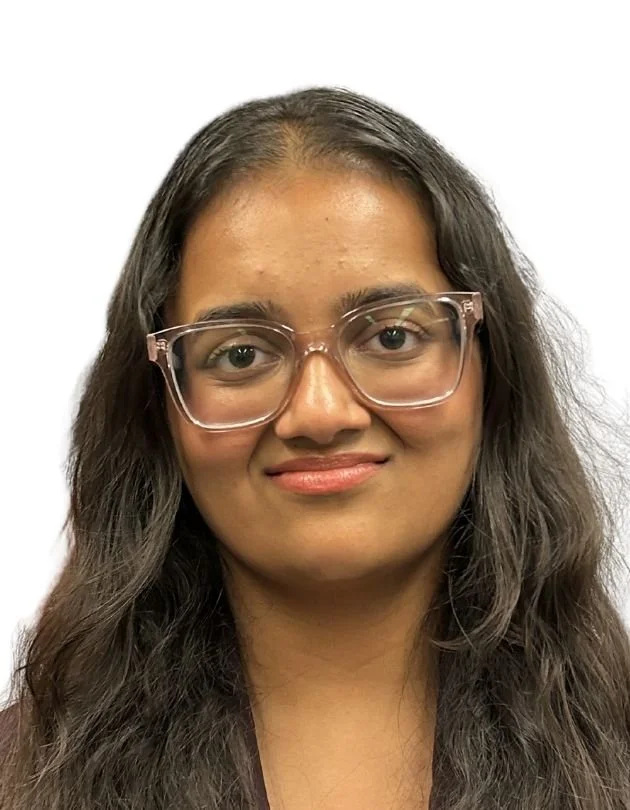
About the Author
Bhavya Agarwal is a junior at the University of Massachusetts Amherst pursuing Computer Science and Mathematics. She is passionate about building AI systems that are both technically rigorous and socially meaningful. Bhavya has applied her skills in machine learning and NLP through an internship at the UMass Center for Data Science, where she developed LLM-based knowledge retrieval system. On campus, Bhavya serves as a Resident Assistant and holds multiple leadership roles in Delta Kappa Delta, a multicultural sorority, where she supports her community through service, academics, and mentorship. Outside of her technical work, she is drawn to the intersection of language and computation.
