![[DEFINE]: Our AI Futures](http://images.squarespace-cdn.com/content/v1/69c6d200c55e595fae9b42eb/cceee3eb-0a64-480a-a252-8300b82ce3ce/white_logo_edged.png?format=1500w)
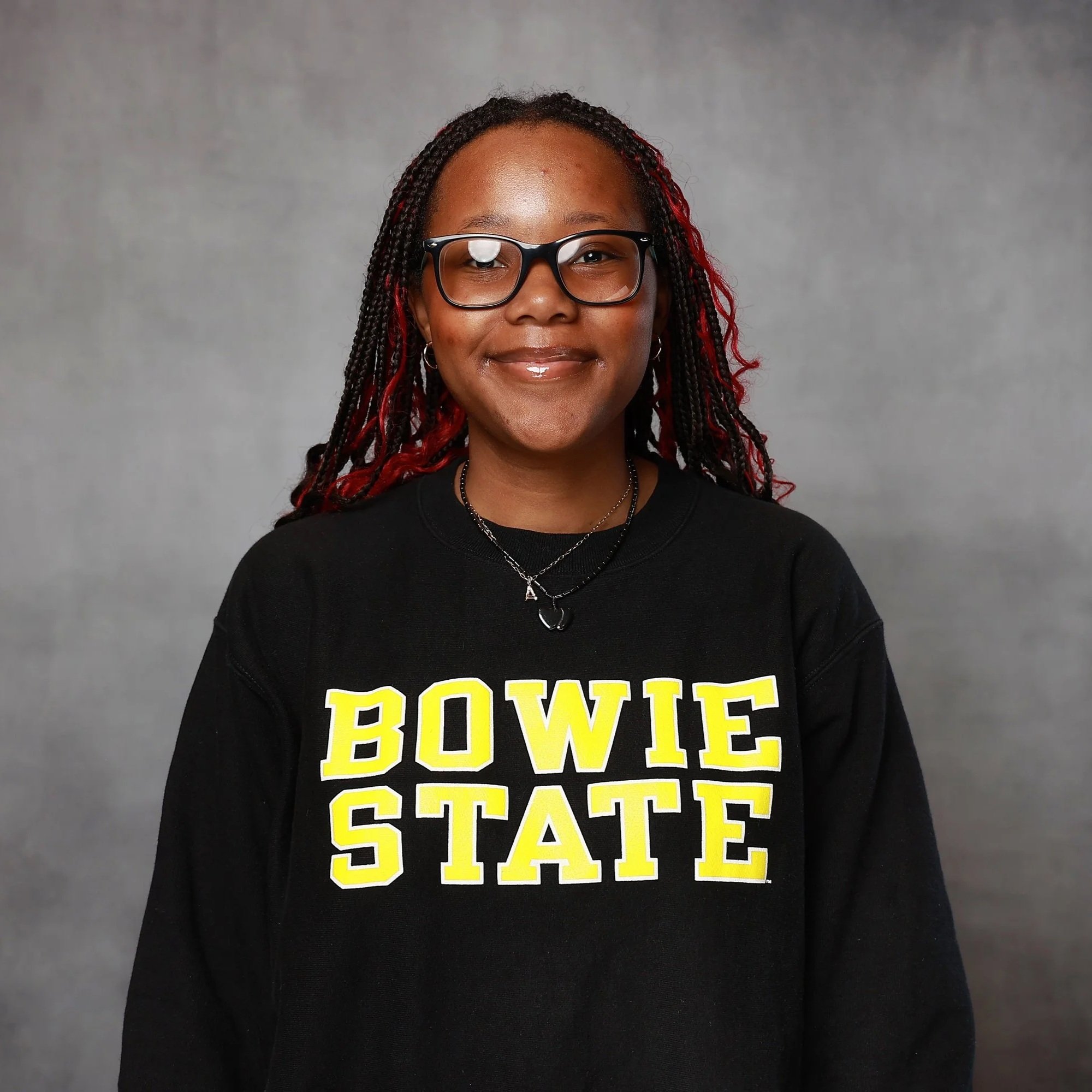
Ashanti Boone
Hi! My name is Ashanti Boone, and I am a first-year Master’s student studying Computer Science with a specialization in AI. I entered computer science before the recent AI boom because I loved math and problem solving, not realizing how deeply AI would shape my career and the world around me.
During an ethics course in undergrad, I read studies about AI systems used to support criminal justice decisions and learned how algorithmic bias could disproportionately impact Black individuals. I remember feeling shocked and honestly a little scared. AI had always felt futuristic to me, but suddenly I realized these systems were already influencing real lives. I talked about it with my friends, trying to understand how technology designed to be objective could still reproduce human bias. For the first time, I realized technology could shape people’s lives without them fully understanding or even knowing how those systems worked.
That moment stayed with me. During a later internship, I found myself surprised by how many engineers underestimated the importance of ethics education. Around me, AI was becoming impossible to ignore. On social media, I watched AI-generated content spread rapidly while people interacted with it as though it were real. As a tutor, I saw students use AI to solve basic algebra problems and watched concerns about cheating grow. I realized AI was no longer a distant idea. It was actively shaping how people learn, communicate, and make decisions. Those experiences shifted my focus from traditional software engineering toward research, education, and policy. Today, I assist with AI literacy research through an educational escape room designed to help non-expert adults think critically about AI and understand its ethical implications. Through this work, I am not only helping others navigate AI more responsibly, but also deepening my own understanding of these systems and their societal impact. My long-term goal is to use that technical knowledge to contribute to stronger AI policy and governance because I believe technology can be transformative only when it is developed responsibly and reflects the diverse communities it affects.
AI creates exciting opportunities to improve healthcare, expand access to information, and automate difficult tasks. But I also worry that the rapid race to develop AI may outpace our willingness to ask difficult ethical questions. I want to work on this because I fear that systems built without enough reflection, accountability, or diverse perspectives could do more harm than good. The future of AI should not be defined only by what technology can do, but by how responsibly we choose to develop, teach, and govern it.
About the Author
Ashanti Boone is a first-year master’s student at Georgia Tech studying Computer Science with a specialization in AI. Passionate about diversifying technology and promoting responsible AI governance, she has shifted from software development toward improving AI systems and public understanding of their impact. A former Apple and Goldman Sachs intern and past president of Women in Computer Science, Ashanti now serves as social media chair for Women’s Club Hockey and student government. This summer, she is volunteering as a product manager to redesign a website for a nonprofit supporting the elderly in South Africa. Outside the classroom, she enjoys puzzles, reading, movies, and sharing her passion for tech through her socials.
